For students: a learning tool to increase comprehension and retention For teachers: a ready-made teaching tool to add visual impact in the classroom For history buffs: novel technology to provide new perspectives

The largest online collection of animated historical maps
Our series of animated maps have been approved by the French Ministry of National Education and authorized to us the "tools of pedagogical interest" label

Our offers for:
They have recommended our site:
EuroclioEuropean Association of History Educators Queensland History Teachers' Association
Partnerships
Armchair General, the interactive history magazine
Our 23 map series currently online:
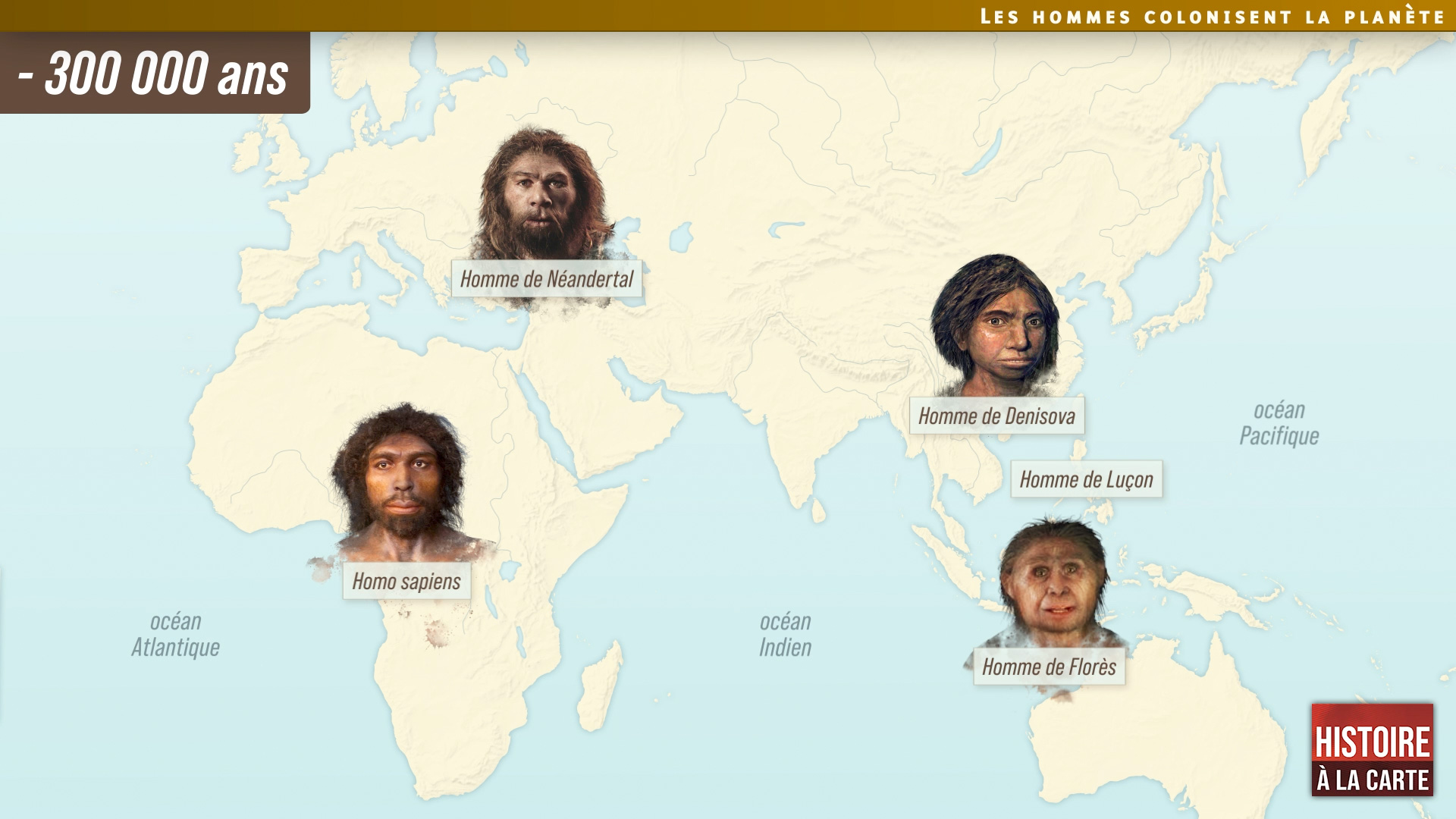
Prehistory
(5 animated maps)
Humans colonise the planet - Settlement of Australia - Colonisation of the Americas - The invention of agriculture - Farmers reach Europe
The Bible and History
(12 animated maps)
The Book of Genesis – Abraham – The exodus and Moses - The Conquest of Canaan – The kingdoms of Judah and Israel - Exile to Babylon – The Maccabees and the Hasmonean kingdom – The Jewish diaspora
Ancient Greece
(16 animated maps)
The Greek world - colonization - a city-state: Athens - the Pan-Hellenic sanctuaries - Alexandria, a Hellenistic city - the Greco-Persian wars - Marathon - Salamina - the Athenian Empire - the conquests of Alexander the Great
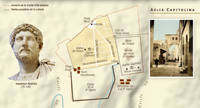
Jerusalem: The History of a Global City
(12 animated maps)
Biblical Jerusalem, - King David – Solomon - Herod - Temple Mount - Mount Zion - Mount of Olives - Aelia Capitolina - al-Quds - crusader period - Church of the Holy Sepulchre - Haram Al-Sharif – Ottoman Jerusalem – Soliman – Jerusalem beyond its walls – Jerusalem a divided city
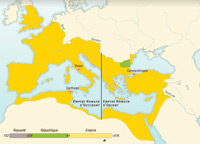
Rome and its Empire
(6 animated maps)
This new series will have a total of 16 animated maps. 6 are currently available online.
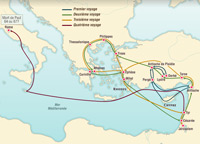
History of Christianity (Part I – until the end of the 15th century)
(4 animated maps)
This new series will be made up of 17 animated maps. 4 maps are currently online.
Middle Ages
(8 animated maps)
 School version
The conquests of Justinian The Carolingian Empire - Charles the Great- the Arab conquest – The first crusade – Al-Andalus the Reconquista - The Hundred Years’ War - The Black Death - Trade in medieval Christendom
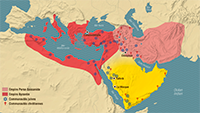
Origins of Islam and the Arabo-Muslim Empire
(7 animated maps)
War between the Eastern Roman Empire (or Byzantine Empire) and the Persian Empire - The early years of the Muslim community - The Arab conquests
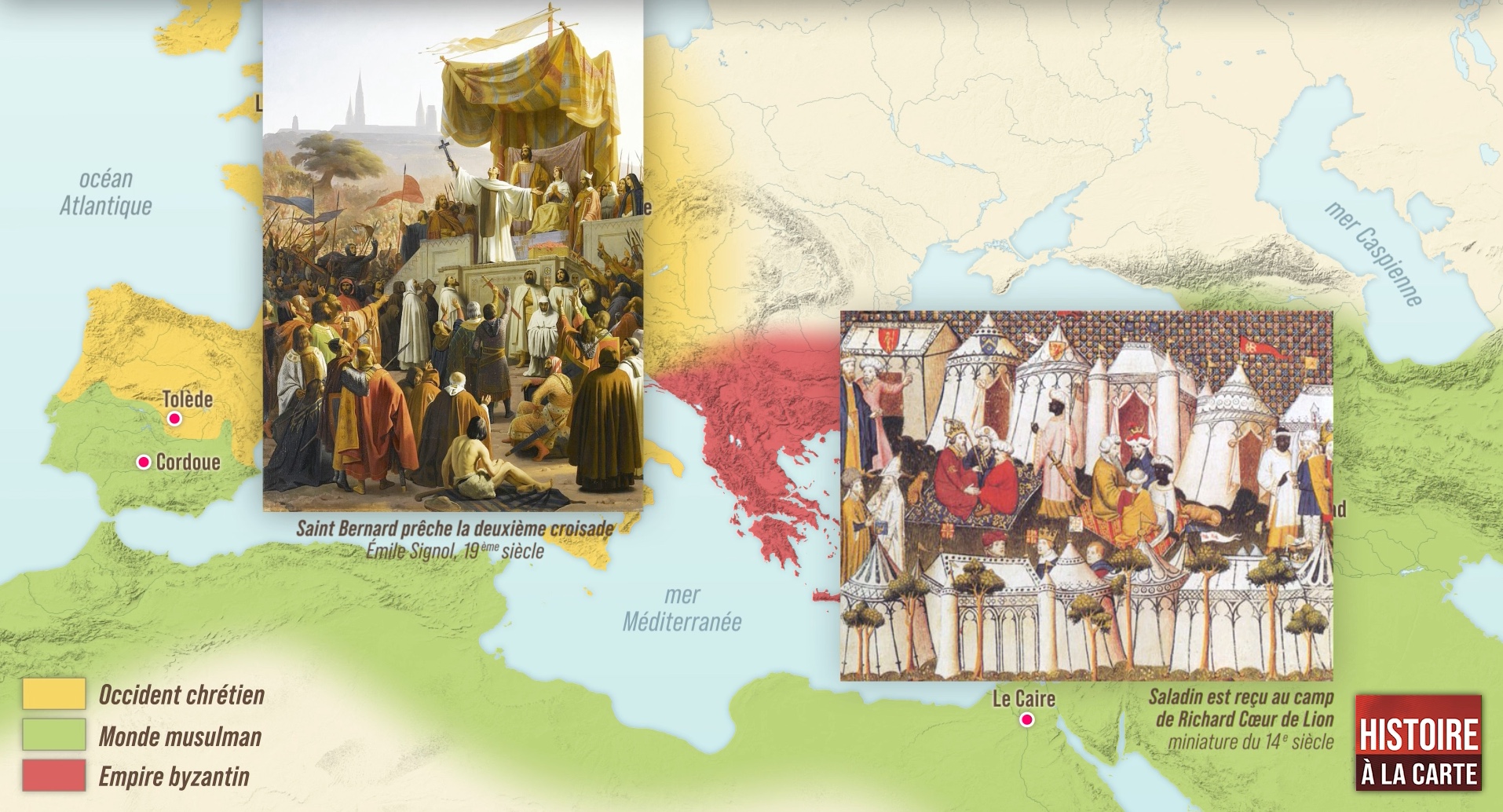
Crusades
(12 animated maps)

Council of Clermont - Western Christianity - Muslim world - Byzantine Empire - Fatimid Caliphate - Abbasid Caliphate - Crusader States – Latin Empire of Constantinople – Jerusalem - Saladin - Richard the Lionheart - Philip Augustus - Louis IX
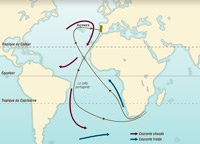
The Age of Discovery (Part I)
(16 animated maps)
Magellan's voyage - Christopher Columbus - Vasco da Gama - Bartolomeu Dias - Amerigo Vespucci - Treaty of Tordesillas - Trade in the Indian Ocean in the 15th century - Ibn Battuta - Zheng He - Cape Bojador
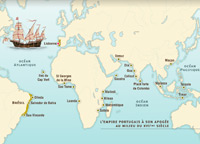
The Portuguese and Spanish Empires (Part I, 16th-17th centuries)
(12 animated maps)
The Portuguese Empire - Brazil - Trading posts and routes - African coast - Indian Ocean - Macau - Spice Islands - Spanish Empire - Viceroyalty of New Spain - Viceroyalty of Peru - Seville -Carthagena - Veracruz - Manila
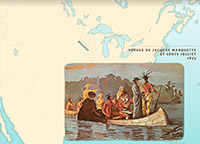
European Colonies in North America 16th-18th centuries
(7 animated maps)
This new series will have a total of 11 animated maps. 7 are currently available
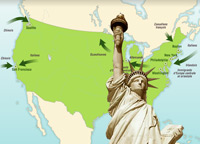
The United States: a territorial history
(20 animated maps)
The 13 colonies - the Declaration of Independence - the Treaty of Paris - the Lewis and Clark expedition - Admission of New States and the Slavery Issue - the Indian Removal Act - Manifest Destiny - the "Melting Pot" - the End of the “Frontier”
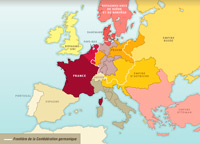
Europe and nations, 1815-1914
(24 animated maps)
History of Europe during the 19th century: Congress of Vienna - the revolutions of 1848 - unification of Germany - unification of Italy - nationalism - national minorities - Balkan wars - colonial empires
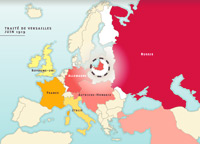
Europe and nations, 1918-1942
(19 animated maps)
History of Europe between 1918 and 1942: Treaty of Versailles - creation of new States - authoritarian and totalitarian regimes - Munich Agreement - Molotov-Ribbentrop Pact - outbreak of the Second World War…
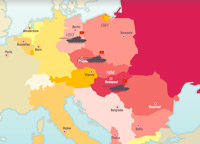
Europe and nations since 1945
(16 animated maps)
History of Europe since 1945: the Yalta and Potsdam Conferences - the Cold War - NATO - the Warsaw Pact - construction of Europe - reunification of Germany - collapse of the USSR
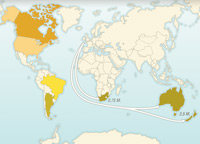
Europe's colonial expansion, 1820-1939
(19 animated maps)
Europe’s colonial expansion: colonization of Africa - colonization of Asia - Empire in India - French Colonial Empire - British Empire - colonies and colonial empires of European countries
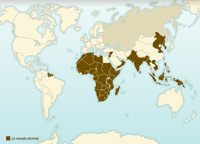
Decolonization after 1945
(14 animated maps)
World dominance in 1939 - the colonial system disrupted by the Second World War - post-1945 rapid moves towards decolonization - independence in Asia - independence in Africa
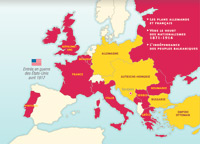
The first World War, 1914-1918
(20 animated maps)
Triple Alliance - Triple Entente - Sarajevo assassination - Battle of the Marne - Dardanelles Campaign - Battle of Verdun - Battle of the Somme - Submarine Warfare - Treaty of Brest-Litovsk - Armistice of Compiegne - Treaty of Versailles
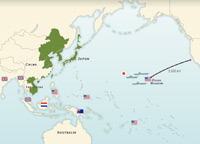
The second World War, 1939-1945
(15 animated maps)
Invasion of Poland - the Blitzkrieg - Battle of Britain - The Battle of the Atlantic - Pearl Harbor - Operation Torch - Stalingrad - the final solution - D Day - Okinawa - International Conferences: Tehran, Yalta, Potsdam Hiroshima - Nagasaki
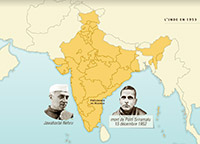
History of India since Independence in 1947
(5 animated maps)
This new series will have a total of 10 animated maps. 5 are currently available online.
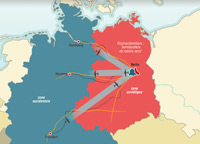
The Cold War and Confrontation between East and West 1947-1991
(9 animated maps)
A bipolar world - North Atlantic Treaty - Warsaw Pact - the crisis of the Cold War: The Berlin Blockade - the Cuban missile crisis - the construction of the Berlin Wall - the Euro-missile Crisis - the Wars: the Korean War, the Vietnam War
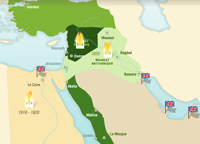
The Middle East since the beginning of the 20th century
(18 animated maps)
History of the Middle East since the beginning of the 20th century: Ottoman Empire - European interference - French and British mandates - independence of Arab countries - creation of the State of Israel - wars in Lebanon and Iraq